

Don’t Quit. Try This.
3 things to help you when trying something new feels hard.

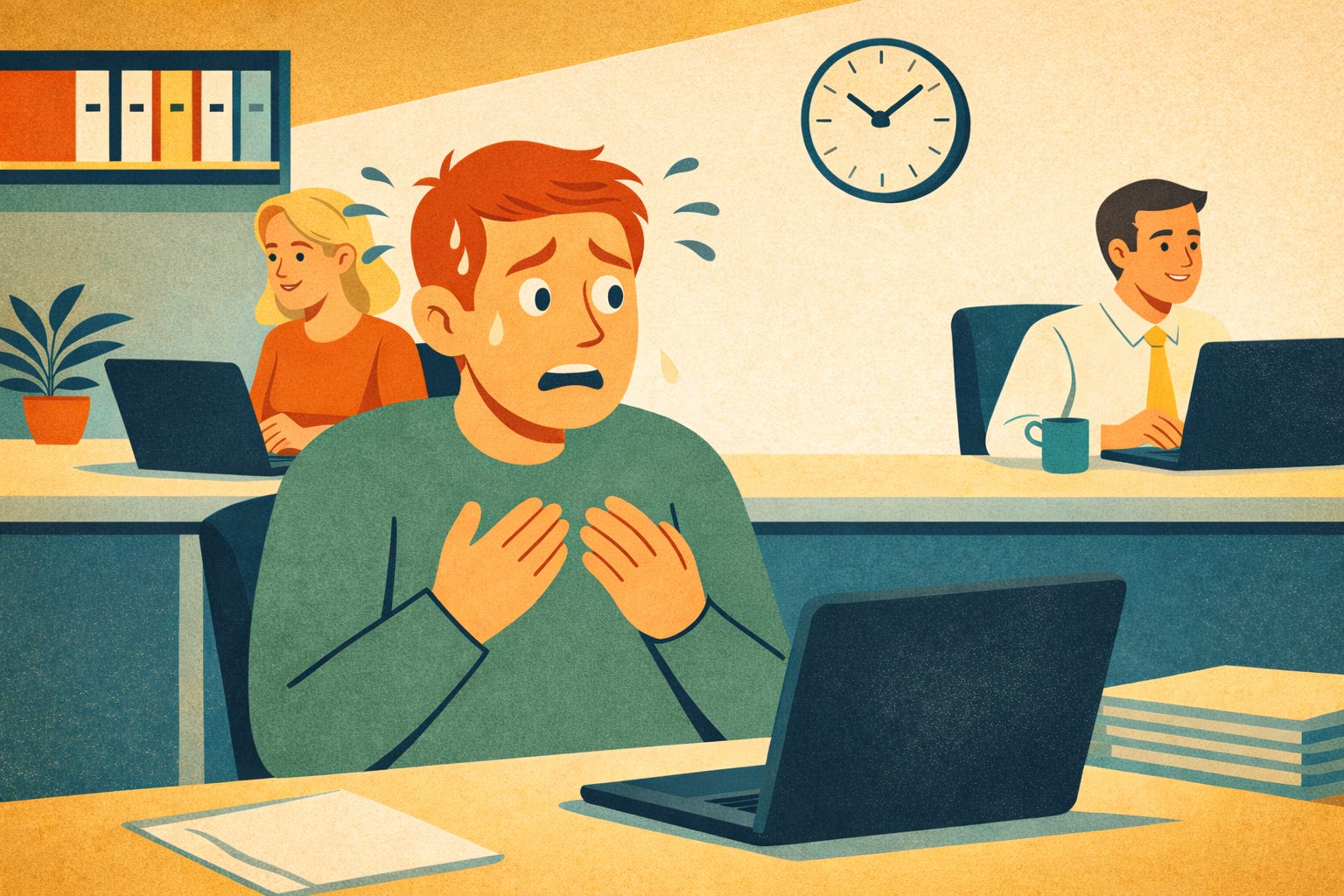
I was talking to a client once who had such anxiety about his new job that he was on the verge of quitting. In fact, in a moment of panic, he almost did – his boss getting pulled into a meeting saved him that day.
In his previous role, my client was the rockstar. The type to ace performance reviews. Guaranteed bonus. Employee of the year. Even among his friends, he was used to coming out on top – football, basketball, however they were competing.
Now his new colleagues were outshining him. Which makes sense – they’d been there for years and he had a lot to learn.
When you’re used to being number one, it can feel frustrating or demoralizing when you stop hearing as much praise as you’re used to.
This is where external validation really trips people up.
Instead of focusing on doing a great job because you care about contributing, you’re worried about what everybody else thinks of you.
Am I good enough? Do I look incompetent?
When things feel hard and you’re not sure you’re going to make it, there’s a good chance you're not failing – you're holding yourself to an unreasonable standard. This causes a lot of suffering.
What is actually expected of you right now?
I’ve had a number of clients in the last year dealing with something similar. High performers used to being the best – that’s why they got recruited in the first place.
And now they feel like the worst because they’re comparing themselves to people who’ve been in the job for a very long time.
One thing we work on together is slowing down and clarifying their role and expectations in this moment.
Unreasonable expectation → I need to be as confident and knowledgeable as the CEO.
Rational expectation → I aim to perform well as a new hire and I’m capable of figuring things out.
If you want to be effective in your job, think about what actions could help you, such as:
asking questions,
listening, and
building relationships.
When we feel insecure, we often do the opposite. We stay quiet. We try to figure everything out on our own. We wait to be hit by a bolt of confidence to relieve us of our anxiety.
Confidence doesn’t come from waiting. It comes from participating.
Focus on what’s in your control: Your effort, your curiosity, and how you show up.
Instead of putting so much emphasis on the value of confidence, lean into the values of curiosity and courage.
When you’re curious and open, you learn faster. You build relationships. You’re more effective than if you’re sitting quietly by yourself, trying to figure everything out alone.
So if you’re starting something new – taking a promotion, having a baby, scaling a mountain – and you’re wondering if you’re cut out for this, ask:
What’s my role here?
What reasonable expectations do I have right now?
What values and thoughts can help get me there?
Unhelpful thought → I need to know everything.
Helpful thought → If I don’t know something, I will find the answer.

Think about life on the other side
There’s a lot of discomfort that comes along with being the new person. A stuck in the mud feeling. You’re conscious of your own incompetence.
To help you get through the hard part, it can help to think about what life will be like on the other side.
This is how I survived the bone-chilling winters in Boston when I was a car-less grad student.
I’d walk through the Common at night, weather-induced tears streaming down my face, soaking my scarf, and tell myself:
“This will be over soon. You’ll be back in your apartment. It will be warm. You’ll take a hot shower to thaw out and put on pajamas. This will soon be over. You’re almost home. You can do this.”
I still recite these mantras whenever I’m facing a physical or emotional challenge.
You can do this. You’re almost there. Soon, this part will all be over.
So if you’re struggling right now, think about life on the other side. Visualize how it will feel when you make it through the hard part.
When you keep going, you start feeling more competent, and this eventually leads to feeling more confident.

Notice how far you’ve already come
We’re very good at noticing when we feel like we’re bad at something, less good at noticing our improvement.
We make progress slowly, and often don’t realize it because the change becomes who we are. And because we’re busy comparing ourselves to others.
It’s important to check your progress against yourself – not against other people.
This is where my clients in new roles often struggle. They can’t sleep because they feel like they’re failing – not because they are, but because they don’t know as much as Charlie in Finance, who’s been at the company for 20 years.
That’s not a fair comparison.
Instead of worrying, “Why don’t I know this yet?”
Try asking, “What do I know now that I didn’t know six months ago?”
One client went from zero client presentations to leading four in a week. Another went from panicking at the thought of a routine work task to building a system that helped her entire team.
These aren’t just wins – they’re evidence you’re moving forward.
I had a small reminder of this myself recently.
I was at the gym, 30 seconds into my chest press routine, when a man comes up to me and asks, “Are you almost done? Have you been here long?”
I offer a friendly, “I just got here. I’ll only be a few minutes.”
“Can we share?” he asks.
I don’t mind sharing, but it doesn’t make sense for the amount of time I’ll be there (maybe I need to up my gym game!). So I repeat, “I’ll literally just be two minutes.”
He stands there and watches me, which I find a little weird since there are literally 100 other machines he can use while he waits. But I don’t feel rushed or uncomfortable. I don’t feel like I have to stand my ground. I just finish my set and move on.
In the past, that interaction would have thrown me. I probably would’ve jumped up and offered my space to the guy, “Oh, you can take it.” In fact, I never used to use the machines at all. I hid in all-female body pump classes, lifting light weights to the tune of Usher. Yeah!
I’ve changed. You’re changing too – you just might not notice it yet.
When things feel hard, it’s easy to assume something has gone wrong – or that something’s wrong with us.
What if it just means you’re in the middle of something that matters?
The middle is messy. You’re probably making more progress than you realize.
Sarah Mikutel is a communication and mindset coach for introverts (and extroverts on the shy side). Visit sarahmikutel.com to learn how she can help you.
Thank you for sharing this another great piece... For me the issue is not anxiety or confidence but ethical judgement. Cues from the reactions of others shape our idea of worth. This is an ethical mistake because it relocates value outside the person. When someone holds themselves to a standard that does not belong they create a conflict between what is required and what they imagine is needed. Ethical action depends on recognising the correct standard for this moment and directing one’s choices towards it. A Stoic would say that the ethical task is to see what one can choose and what one cannot. Skill develops over time, and reason interprets the early attachments that come from our natural constitution. The pressure of unrealistic expectations comes from giving external things a value they do not possess.